
India has emerged as one of the fastest-growing solar markets in the world. With an ambitious target of 500 GW of renewable energy capacity by 2030, the country has already crossed 119 GW of installed solar capacity as of July 2025, including more than 19 GW from rooftop solar alone according to MNRE [1]. Rooftop installations are expected to play a transformative role in reducing electricity costs for households and businesses, while helping India move closer to its climate goals. Initiatives like the PM-Surya Ghar Muft Bijli Yojana, net metering policies, and falling panel prices have made solar more accessible than ever before.
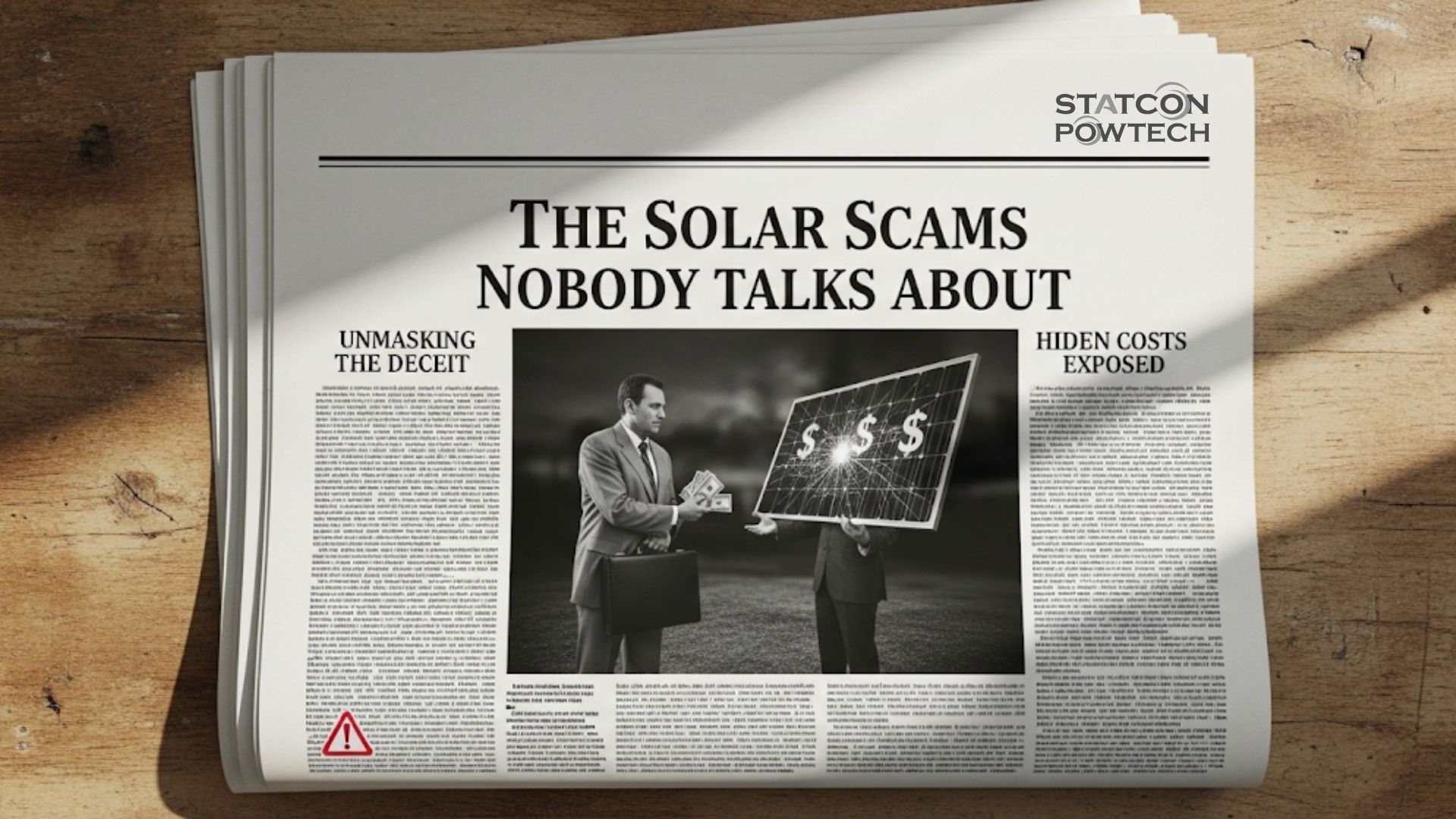
Yet, beneath this success story lies a troubling reality. As more families, housing societies, and businesses rush to embrace solar, the sector has also attracted fly-by-night operators, misleading sales tactics, and poor-quality products. Instead of clean energy and financial savings, many early adopters have been left with faulty systems, safety hazards, and broken promises. These issues don’t just hurt customers; they also erode trust in an industry critical to India’s future.
Fake Installers and Fly-by-Night Operators
One of the biggest challenges plaguing the rooftop solar sector is the rise of unqualified installers who appear overnight to capitalize on subsidy schemes. Many of these operators undercut prices, secure projects, and then vanish, leaving customers stranded. Because they lack proper training and certification, they often use undersized cables, poor earthing methods, or unsafe mounting structures. These shortcuts can result in frequent system failures, and in the worst cases, even fires.
Poor-Quality Panels and Components
Another widespread problem is the misrepresentation of solar components. The market is flooded with panels falsely branded as “Tier-1” but in reality, they are refurbished or low-quality imports that degrade much faster than promised. Inverters, which are the heart of the system, are often generic products without reliable service networks. Mounting structures made of substandard metals rust or collapse during monsoon rains.
Warranty Traps
Solar sales pitches often include the attractive promise of a “25-year warranty.” While technically true, this claim is highly misleading. The product warranty which covers defects in panels is usually just 10 to 12 years. The performance warranty, which extends to 25 years, only guarantees that panels will not degrade beyond a certain efficiency level. Inverters, meanwhile, carry only 5-7 years of warranty, yet are the first components likely to fail. Customers who don’t read the fine print discover these differences too late, often facing large replacement costs within a few years.
Misleading ROI and Savings Promises
Exaggerated claims like “three-year payback” or “zero electricity bills” are common but rarely realistic. Dust, soiling, and city pollution degrade panel performance far more than most calculators account for. For instance, a field study in Ahmedabad found that panels lost up to 50% of output after just 20-30 days without cleaning [2]. In Delhi, researchers reported that high PM2.5 and haze levels reduce annual solar insolation by around 11.5%, leading to significant revenue losses [3]. Controlled experiments further show that even small dust deposits, as little as 10 grams, can slash output by 25–60%, depending on the dust type [4].
The result? Instead of the “3-year payback” often promised, most households realistically see 6-8 years, while commercial setups average 4-6 years.
Hidden Costs and Approval Delays
Many customers discover too late that the quoted project cost does not include everything. Expenses for roof strengthening, earthing pits, lightning protection, upgraded meters, or load enhancements often come as unpleasant surprises. On top of this, bureaucratic delays in net metering approvals mean that even fully installed systems cannot feed power back into the grid, sometimes for months, delaying returns and creating frustration.
Subsidy Misrepresentation
Government subsidies have made solar more affordable, but they have also opened the door to exploitation. Many installers falsely claim that subsidies apply to all projects, when in reality, they are limited, such as the 40% subsidy that only covers residential systems up to 3 kW. Others assure customers that subsidies will be released within two months, when in practice, the process can take 6-12 months. There have also been cases of fraud, where contractors collected advance “subsidy fees” and disappeared. These scams erode public trust not just in solar companies, but in government programs themselves.
Why the Right Installer Matters
While the risks are real, the good news is that they can be avoided with awareness and the right choice of partners. Here’s how homeowners and businesses can safeguard their solar investments and how a professional, transparent installer makes all the difference.
- Verify Installer Credentials – Ensure your installer is MNRE/state registered, employs certified engineers, and has a track record of completed projects.
- Demand Transparency in Components – Ask for BIS-certified panels, branded inverters, and warranty certificates upfront.
- Understand Warranty Details – Know the difference between product and performance warranties and ask for extended inverter coverage.
- Seek Realistic ROI Estimates – Trust only site-specific assessments that account for shading, dust, and grid policies.
- Clarify All Costs Upfront – Insist on a full Bill of Quantities with no hidden charges.
- Be Smart About Subsidies – Verify claims through official portals and avoid “extra processing fee” scams.
- Ensure Reliable Post-Installation Support – Choose companies that provide AMC (Annual Maintenance Contracts) and responsive customer service.
Why Statcon Powtech is the Right Partner
This is where Statcon Powtech stands apart. As one of India’s most trusted solar and power electronics companies, Statcon Powtech has built its reputation on transparency, engineering excellence, and long-term reliability. With decades of experience in renewable energy, the company offers:
- Certified Installations – Every project is executed by trained professionals following MNRE and BIS standards.
- Genuine Components – Only Tier-1 panels and branded inverters with global recognition are used.
- Clear Warranties – Customers get written clarity on product, performance, and inverter warranties—no fine-print surprises.
- Realistic ROI Projections – Savings estimates are site-specific, data-backed, and designed to prevent unrealistic expectations.
- Transparent Pricing – Every proposal includes complete cost breakdowns, so there are no hidden expenses.
- End-to-End Support – From subsidy guidance to post-installation maintenance, Statcon Powtech ensures your system delivers for decades.
By tackling the very scams and pitfalls plaguing the solar industry, Statcon Powtech doesn’t just install inverters and panels, it restores trust in solar energy. For households and businesses alike, choosing the right partner means securing not just clean power, but also peace of mind.
Solar is here to stay. Don’t let scams steal your sunshine. With Statcon Powtech, you can embrace the solar revolution with confidence, knowing your investment is protected, your returns are real, and your future is bright.
References: –
[1] MNRE Report – https://mnre.gov.in/en/physical-progress/
[2] Large Reductions in Solar Energy Production Due to Dust and Particulate Air Pollution – https://pubs.acs.org/doi/10.1021/acs.estlett.7b00197?
[3] Urban Haze and Photovoltaics – https://arxiv.org/abs/1804.05249?
[4] Effect of dust on power loss – https://sustainenergyres.springeropen.com/articles/10.1186/s40807-017-0043-y?